
United States Marshals and Their Deputies: 1789-1989
Broad Range of Authority
The offices of U.S. Marshals and Deputy Marshal were created by the first Congress in the Judiciary Act of 1789, the same legislation that established the Federal judicial system. The Marshals were given extensive authority to support the federal courts within their judicial districts and to carry out all lawful orders issued by judges, Congress, or the president.
As a balance to this broad grant of authority, Congress imposed a time limit on the tenure of Marshals, the only office created by the Judiciary Act with an automatic expiration. Marshals were limited to four-year, renewable terms, serving at the pleasure of the president.
Until the mid-20th century, the Marshals hired their own Deputies, often firing the Deputies who had worked for the previous Marshal. Thus, the limitation on the Marshal's term of office frequently extended to the Deputies as well.
Their primary function was to support the federal courts. The Marshals and their Deputies served the subpoenas, summonses, writs, warrants and other process issued by the courts, made all the arrests and handled all the prisoners. They also disbursed the money. The Marshals paid the fees and expenses of the court clerks, U.S. Attorneys, jurors and witnesses. They rented the courtrooms and jail space and hired the bailiffs, criers, and janitors. In effect, they ensured that the courts functioned smoothly.
The Marshals took care of the details, thereby freeing the judges and attorneys to concentrate on the cases before them. They made sure the water pitchers were filled, the prisoners were present, the jurors were available and the witnesses were on time.
But this was only a part of what the Marshals did. When George Washington set up his first administration and the first Congress began passing laws, both quickly discovered an inconvenient gap in the Constitutional design of the government. It had no provision for a regional administrative structure stretching throughout the country . Both the Congress and the Executive were housed at the national capital.
No agency was established or designated to represent the federal government's interests at the local level. The need for a regional organization quickly became apparent. Congress and the President solved part of the problem by creating specialized agencies, such as customs and revenue collectors, to levy the tariffs and taxes. Yet, there were numerous other jobs that needed to be done. The only officers available to do them were the U.S. Marshals and their deputies.
Thus, the Marshals also provided local representation for the Federal government within their districts. They took the national census every 10 years through 1870. They distributed presidential proclamations, collected a variety of statistical information on commerce and manufacturing, supplied the names of government employees for the national register and preformed other routine tasks needed for the central government to function effectively.
Over the past 200 years, Congress and the president also called on the Marshals to carry out unusual or extraordinary missions such as; registering enemy aliens in time of war, capturing fugitive slaves, sealing the American border against armed expeditions aimed at foreign countries and swapping spies with the Soviet Union.
General Practitioners
These diversified duties precluded the Marshals from developing any particular specialty. They were law enforcers, but also administrators. They needed to be adept in accounting procedures and pursuing outlaws. in quelling riots and arranging court sessions. The legacy of their history was the avoidance of specialization. Even today. in this age of experts, U.S. Marshals and their Deputies are the general practitioners within the law enforcement community. As the government's generalists, they have proven invaluable in responding to rapidly changing conditions. Although other Federal agencies are restricted by legislation to specific well-defined duties and jurisdictions, the Marshals are not. Consequently, they are called upon to uphold the government's interests and policies in a wide variety of circumstances.
For the American people, the Marshals personified the authority of the federal government within their communities. The frequent outbursts of opposition to Federal power that characterize much of American history were often first directed at individual Marshals or Deputies. The Marshal, in effect, was the point of contact in the friction between the national government and local communities.
The Whiskey Rebels of 1794, for example, violently opposed a national tax on whiskey. They expressed that opposition by taking Marshal David Lenox prisoner. Similar reactions obtained toward such noxious federal measures as the 1850 Fugitive Slave Law, the post-Civil War Reconstruction Acts, and the desegregation of the South in the 1960's.
Peril of Your Life
Nor was opposition to the federal government restricted to individual citizens or groups of citizens. State and local governments also took umbrage at Federal measures. Their anger, too, was often directed at individual Marshals who suffered interference, arrest, and imprisonment as a result.
In March 1809, the Pennsylvania state legislature passed a resolution calling on all citizens to resist Marshal John Smith's court-ordered efforts to collect money from the state in the complicated Olmstead Case.
When the Marshals went to the house of one of the defendants with a writ of attachment in hand, eight state militiamen greeted him with bayonets. "In the name and by the authority of the United States, I command you to lay down your arms and permit me to proceed," Marshal Smith declared. "In the name and by the authority of the Commonwealth of Pennsylvania. I command you to resist him," ordered General Bright, the commander of the squad. Turning to Marshal Smith, Bright warned that any further effort to enter the property would be "at the peril of your life."
The Marshal, after taking down the names of the militiamen, returned to the courthouse, where he promptly called on the Secretary of State for permission to raise a posse of 2,000 men. The next day, Smith went back alone to the defendant's house, which was still guarded by General Bright and his men. Circling around back onto Cherry Street, he scaled the the fence and served his process on the defendant through the back door. Later, General Bright and his men were indicted and found guilty of resisting a federal court order. Bright was sentenced to three months imprisonment, his men to one month. All were later pardoned by President James Madison.
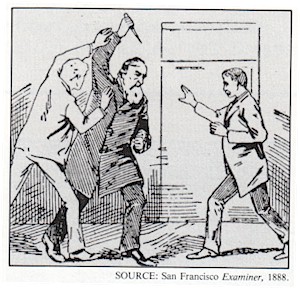
Other instances of interference by the local governments abound. After the civil war, dozens of Deputies were incarcerated in Southern jails as a result of their efforts to enforce Federal laws. Deputy W.B. Blackburn was indicted by the Circuit Court of Tuscaloosa County, Alabama, in 1844 for carrying a concealed weapon. The evidence used against Backburn consisted of eyewitness accounts of two moonshiners he had arrested.
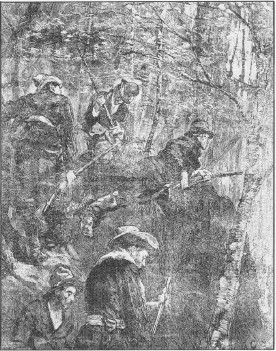
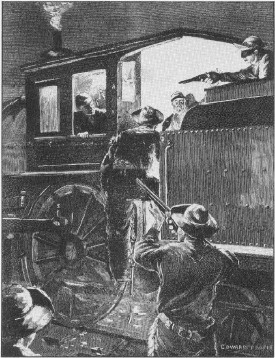
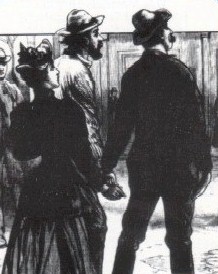
Other Deputies were arrested for murder or attempted murder, depending on the results of their gunfights with moonshiners and other criminals. Because the Marshals enforce federal laws in their local areas, they are easy targets for state and local authorities to vent their frustration over federal measures.
|
|
|
Civilian Enforcers
Yet, in performing their duties in the face of opposition from the local populace and governments, the Marshals served an extremely important function. They were the barrier between civilian government and military rule. They were the civilian enforcers of the law.
When the Marshals were overcome by opposition, the presidents under whom they served had little choice but to call out the military. Marshal David Lenox's brief captivity by the Whiskey Rebels convinced President Washington to muster 13,000 state militiamen to put down the Whiskey Rebellion.
The Marshals in the southern states after the Civil War enforced the new Civil Rights acts, but they frequently called on the army for assistance. On the night of September 30, 1962, President John F. Kennedy reluctantly sent military forces to Oxford, Mississippi after a major riot erupted over the attempt by Marshals to enforce the court-ordered enrollment of James Meredith.
|
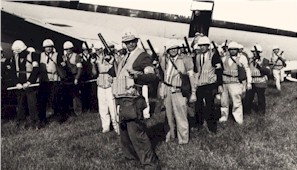
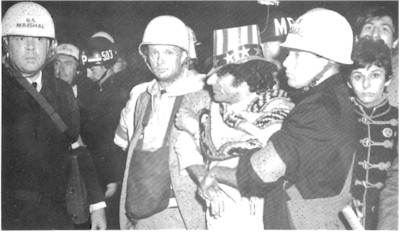
At the Pentagon in October 1967, anti-Vietnam War demonstrators confronted a thin, single-file line of Marshals blocking their path to the Defense Department. Behind the Marshals, and clearly supplying the government's muscle, stood large numbers of regular Army troops. Standing between the rioters and the Army, the Marshals symbolized the civilian power of the government which, when overcome, allowed the Amy to step into the fray. At the same time, the Marshals were on hand to take arrests, a civilian power not usually bestowed on the military.
In a government based on the concept of civilian supremacy, the U.S. Marshals and their Deputies provided the civilian enforcement power. The military was restricted to emergency support. Early on, the federal government adopted measures to make its authority more palatable to the American people. Those who enforced federal laws at the local level generally came from that locality. They understood the people, for they were dealing with their friends and neighbors. This was particularly important in the 19th century when lack of communications made the national government distant and seemingly foreign, but everyone knew or had heard of the Marshal because he had been active in community affairs and politics for years.
For most of their history, U.S. Marshals enjoyed a surprising degree of independence in performing their duties. Quite simply, no headquarters or central administration existed to supervise the work of the Marshals until the late 1950's. Even then, the Executive Office for U.S. Marshals had no real power over the districts until it was transformed into the U.S. Marshals Service in 1969 and given control of the district budgets and the hiring of Deputies. Prior to that, each Marshal was practically autonomous, receiving only general guidance from the executive branch of the government.
As a result. the Marshals; working with the federal judges and U.S. Attorneys in their districts, enjoyed a wide latitude in determining how they would enforce the law. For most of them, the solution was to go as easily as possible. Few of them wanted to give offense to their friends and neighbors, particularly since they knew all to well that the job of Marshal was temporary. Unless they were prepared to leave their homes after their commissions expired, the Marshals struggled to balance the enforcement of Federal laws against the feelings of the local populace.
Loyal to Their Communities
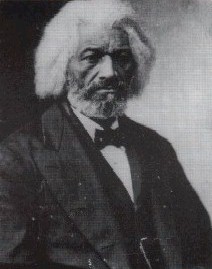
Throughout, the Marshals remained essentially a local organization within the federal framework. They have always been required to live within their districts; most have been natives of the locality they served. They are hometown - men and women familiar with local feelings about national issues. They are people comfortable within their own neighborhoods. Of the first 16 marshals appointed by George Washington, for example, eight were life-long residents of their districts, seven had lived there more than five years. Washington's successors continued the trend in their appointments.
Until 1861, each Marshal reported directly to the Secretary of State. In 1861, Congress assigned supervision of the Marshals and U.S. Attorneys to the Attorney General. For the next century, the Marshals answered to that office. Their reports were distributed to the appropriate divisions within the ever growing Department of Justice. For the Marshals, their mission was national; their methods were local. Until the appointment of James J.P. McShane as Chief Marshal in 1961, the Marshals had no national organization, no Headquarters to speak of.
The Marshals' dedication to duty was not boundless; they did not carry out orders blindly, simply because they were orders. In the month immediately before the opening of the Civil War, Marshals throughout the South resigned. These Marshals chose loyalty to their communities over obedience to the federal government. Although a unique situation, their resignations illustrated the extreme effect of selecting Marshals from within the districts they served.
Most of the time, a comfortable balance between law enforcement and community sensitivities was simple to achieve. Few people disputed the Marshals' right to arrest mail robbers, counterfeiters, or others who broke the federal laws. Nor were there many objections to the Marshals serving process. People generally accepted the principle that the purpose of the courts and trials was to settle disputes, not create them.
In 1896, Congress established a salary for both Marshals and their Deputies and the Attorney General imposed limits on the number of Deputies each Marshal could hire, but the Marshal continued to do his own hiring.
Yet, in attempting to obviate the American people's distaste for strong government, succeeding presidents and Senates ultimately committed a disservice to the development of the office of the U.S. Marshal as a professional organization. The system of appointments, for which the only criteria were presidential nomination and Senate confirmation, limited the professional growth of the Marshals. Most Marshals did not last long enough to develop the skills and experience that marks a professional. Nor were they necessarily selected on the basis of similar skills or experience; nor were they provided any training until fairly recent times. These factors also slowed the development of a cadre of professionals among Deputies.
Quite simply, it was a patronage job, subject to all of the abuses of that system. From 1789 to 1896, each Marshal hired practically as many Deputies as he or she wanted. They were paid on a fee system, collecting set amounts for performing particular tasks, such as serving summonses, writs, or warrants.
More than 40 years later, in 1937, the Department of Justice invoked a new regulation requiring the Marshals to submit resumes and security checks on their Deputies, but this was essentially a veto power over the Marshals' hiring practices, not an active measure to select Deputies for each district. Finally, in 1972, the Marshals Service, itself a recently created headquarters agency superimposed on the individual districts, took control of all hiring and training of Deputies nationwide. The selection of U.S. Marshals remained in the hands of the president.
Yet, the point should not be overemphasized. Professionalism is a 20th century phenomenon in the United States. It simply was not as important in the 18th and 19th centuries as it has become today, particularly in law enforcement. Prior to World War I, federal law, the only law the Marshals enforced, was limited and comparatively simple. The complex of' rules and regulations that characterizes the contemporary world did not exist then. Few Marshals and Deputies had difficulty in quickly learning their duties and carrying out those duties with proficiency. Indeed. those with managerial and accounting experience may have been better suited to the position.
The biggest problem besetting the Marshals of the 1800's was not catching lawbreakers, but accounting for the monies used to run the courts. A small army of accountants at the Treasury and Justice Departments audited them at every turn, disallowing their expenditures on the slightest excuse. Keeping track of the courts' funds was a headache of a job compared to which pursuing mail robbers and other outlaws must have seemed a welcome relief.
In doing their duty, the Marshals accompanied the United States on its route toward democratic self government. Few Marshals rose above the times in which they served, few were better than the laws and the government they obeyed. But that is America. The history of the United States Marshals and their Deputies is, in startling simplicity, the history of the United States. It is the two-hundred-year story of how men and women enforced the law and served the courts, of how they fought and died in support of the ideal of self-government. But more than that, it is the story of how we Americans choose to govern ourselves. The thousands of men and women who served as Marshals or Deputies were, first and foremost, Americans. They took upon themselves for brief and fleeting moments the difficult and dangerous task of enforcing the laws. When they failed, it was an American failure more than a personal one, and when they succeeded, it was an American success. In a government of laws, not men, they were the lawmen.