





Henry Dearborn
The First Marshal of Maine
Among the first generation of United States Marshals, Henry Dearborn clearly stands out as the most prominent. Born in Hampton, New Jersey, on February 23, 1751, Dearborn studied medicine until the outbreak of the Revolutionary War. As troubles with the British increased, he organized a militia company, to which he was elected captain. His company fought at the Battle of Bunker Hill on June 17, 1775.
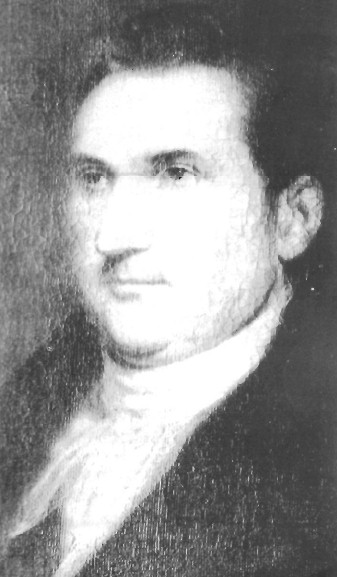
Dearborn accompanied Benedict Arnold's ill-fated expedition to take Quebec in the fall and winter of 1775. Along the way, the small force suffered from cold and hunger. According to legend, Dearborn sacrificed his pet dog to feed his men. In the end, the expedition turned into a disaster and Dearborn was taken prisoner. The British paroled him in May 1776 and exchanged him for British prisoners the following March.
Back with the Continental Army, Dearborn took part in the campaign against Burgoyne and fought at the battles of Ticonderoga and Freeman's Farm. He was with Washington at Valley Forge and served on the commander in chief's staff during the battle of Yorktown with the rank of colonel.
After the war, Dearborn moved to Maine, which was then a part of Massachusetts. Rather than return to the practice of medicine, he remained a soldier with the Maine militia, reaching the rank of brigadier general in 1787 and major general in 1789.
In September of that year, George Washington appointed him Marshal. Dearborn was 38 at the time of his appointment. He served as Marshal for three years until his election to Congress as one of Jefferson's Democratic Republicans in 1793. While Marshal, Dearborn earned the rather dubious distinction of committing the first federal execution when he hanged the murderer Thomas Bird in June'1790.
Dearborn retained his seat in the House of Representatives until 1797. A committed Jeffersonian, Dearborn campaigned actively against John Adams in the election of 1800. Jefferson appointed him Secretary of War in 1801. While in this post, Dearborn ordered the construction of a fort on the western shores of Lake Michigan. From that fort grew the city of Chicago. At the conclusion of Jefferson's two terms as president, Dearborn accepted appointment as collector of the port of Boston.
After the declaration of war against Great Britain in 1812, President James Madison turned to Dearborn-the only Republican with extensive military experience- to take command of the American armies in the northeast, where most of the fighting during the war took place. Unfortunately, Dearborn, who had little experience commanding large numbers of troops in the field, performed poorly. His invasion of Canada, like the expedition he accompanied during the Revolution, ended in defeat. In addition, he failed to deploy his command adequately, which exposed several of his regiments to attack by the British. Madison relieved Dearborn of command on July 6, 1813. But the President retained his faith in Dearborn and nominated him to the office of Secretary of War. A storm of public protest, however, forced the administration to withdraw the nomination. Dearborn retired to Massachusetts.
Dearborn served as the Minister to Portugal for about two years, before again retiring to private life in 1824. He lived in Roxbury, Mass., just outside Boston, until his death on June 6, 1829, at the age of 78.