




Peter Duplessis
A Pirate, a Marshal, and the Battle of New Orleans
Through political savvy and gutsy intelligence gathering, the fourth U.S. marshal for the Territory of Orleans, Peter LeBreton Duplessis, played an important role in the defense and development of a still young United States.
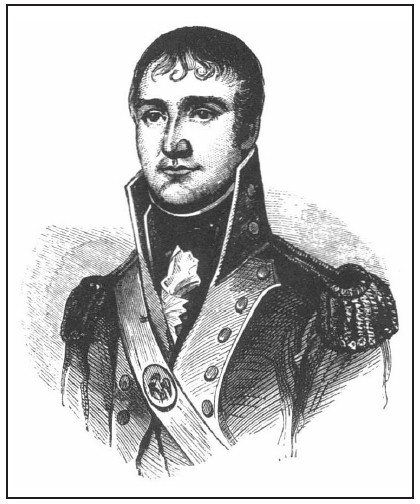
The Battle of New Orleans, pitting the Americans against the invading British forces on January 8, 1815, was awash in subplots and celebrated historical figures, including the territorial governor's feud with famed pirate Jean Lafitte. It was Marshal Duplessis who played an important — albeit little known — role in helping General Andrew Jackson not only save the city but also save his reputation many years later.
- Crescent City Complications
-
According to Marshals Service historian David Turk, the city of New Orleans was something of a political enigma at the onset of the War of 1812. It exhibited the influences of several different cultures, including French, Spanish, Creole, African and British.
In the heart of this mix, the territorial governor, William C.C. Claiborne, found himself having to weigh the consequences upon each of these divergent groups for nearly every political move he made. Not the least of Governor Claiborne's worries was the powerful and ever-popular Jean Lafitte.
With his brother Pierre and a band of 1,000 or so loyal buccaneers, Lafitte was literally king of a very strategically located region known as Barataria, south of New Orleans. This area, made up of three main islands — Grande Terre, Grande Isle and Cheniere Caminada — was a mysterious maze of swamps and bayous.
No vessel could pass into or out of the Mississippi River without having to squeeze past this trio of islands. From this delta stronghold, Lafitte, dubbed The Corsair, wreaked havoc on Spanish merchant ships in the Gulf of Mexico.
Yet, this wily entrepreneur never attacked or plundered any American ships. It's been said that Lafitte valued the budding country's constitutional values.
And it was no secret that he was the toast of New Orleans — drinking in the city's taverns and feted by many of its most prominent citizens.
"Of course, in his own eyes, Jean Lafitte was not a pirate," Turk said. "He considered himself a privateer — claiming to be an agent of the Republic of Cartagena, in modern day Colombia."
He sold pilfered goods such as furniture, fabrics and spices at discount prices — all the while escaping the high tariffs that the American government levied on foreign goods. It was a wildly successful wholesale trade, and many of the people of New Orleans were enamored by him and very grateful for his commerce.
But Lafitte proved troublesome for Governor Claiborne. Spain ruled Mexico at the time and the United States enjoyed friendly relations with its neighbors to the south. As governor, Claiborne not only had to protect the interests of New Orleans' law-abiding merchants but also appease the Spanish authorities who were incensed at Lafitte and his band of swashbucklers for raiding their ships.
The governor found himself in a difficult position. He knew of Lafitte's high standing with some of the townspeople but he was also well aware of the diplomatic pressures of the day.
While Claiborne disapproved of an outsider, much less a pirate, becoming such a part of the American fabric in New Orleans, he fully understood that there were others in the city — including some in the Duplessis family — who supported the New Orleans Association, a business interest helmed by the Lafitte brothers that armed the Mexicans in their attempts to overthrow their Spanish rulers.
In the end, it was the political pressures wielded by the Spanish which forced Claiborne to act. In early summer, 1812, he sent an army unit under Captain Andrew Hunter Holmes into Barataria to put an end to the illegal smuggling.
Lafitte evaded the search team for months, scoffing at their mission. Holmes and his men were forced to endure dizzying heat and disease in the marshy wetlands of Lafitte's stronghold.
But on a mid-November morning, the team's small boats pulled into a hidden cove where Jean and Pierre had just entered. Purely by chance, Holmes stumbled onto his two fugitives.
Bowing to their pursuers' luck, the brothers surrendered without a fight. They were brought into court and locked up. But prominent New Orleans attorney and politician Edward Livingston quickly arranged for their bail.
The trial commenced two weeks later, but neither brother showed up. The governor was chagrined.
- Star Power
-
Enter the U.S. Marshal
Established by an act of Congress in March 1804, the office of the U.S. marshal was created in the Territory of Orleans to solidify the recent Louisiana Purchase. From the onset, the marshal played a pivotal role in governmental affairs.
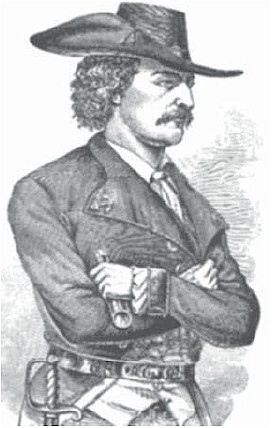
The early marshals were well-connected citizens of New Orleans. The third man to hold the position, Martin Duralde Jr., was Claiborne's brother-in-law. And so it went. But eventually Marshal Duralde, like his two predecessors, grew weary of the ever-changing political climate of the city and its environs and he moved on.
The pressures on these men were intense. There were always competing political factions within New Orleans — not to mention the unavoidable presence of Jean Lafitte and his band of sailing men. Duralde subsequently took the position of register of mortgages, leaving the office of marshal vacant. The governor wanted a person of influence, but he was surprised when the federal government appointed Peter Duplessis on April 30, 1811.
"As was the case so many times back then, Governor Claiborne probably had one of his own associates in mind for the marshal's job," Turk said. "But despite his overtures for another candidate, Marshal Duplessis remained in place."
Duplessis had previously worked as a territorial auctioneer and the keeper of mortgages, and he also served in the local militia. He was from a family steeped in the French-Creole establishment. "The volatility of New Orleans politics probably stabilized the marshal in his position," Turk said. "Louisiana did not become a state until 1812, so prior to that, the governor had the overall administrative command of the territory while the marshal handled all of the policing responsibilities."
Firmly in place as the marshal, Duplessis attended to the business of trying to locate the Lafitte brothers and bring them to trial. On April 19, 1813, he received the official writs from the court.
The writ for Jean read as follows:
You are hereby commanded … that you take the body of Jean Lafitte so that he be and appear before the District Court of the United States for the Louisiana District — to be holden at the City of New Orleans on the third Monday of July next … to answer to the complaint of the United States and that he do file his defense or answer with the Clerk of said Court.
With the arrest warrants in hand, the marshal searched the entire city. But he repeatedly came up empty.
An angry Governor Claiborne placed wanted posters all over town in November of that same year. They read: $500 FOR THE CAPTURE OF JEAN LAFITTE. But the gentleman pirate could not pass on the opportunity to humiliate his rival. He replaced those posters with his own, which were emblazoned with the following: $1,500 REWARD FOR THE CAPTURE OF GOVERNOR CLAIBORNE TO BE DELIVERED TO THE ISLAND OF BARATARIA.
He didn't get Jean, but in March 1814, Marshal Duplessis did arrest his brother in New Orleans for violating federal revenue laws. Pierre was placed in the famous Cabildo, a prison dating back to when the Spanish ruled New Orleans.
However, the prisoner escaped on September 6, 1814. "Posters were placed around town once again — this time for Pierre's capture — but it was clear he was out of reach," Turk said.
- An Offer to Help
-
As the War of 1812 intensified, it garnered the attention of everyone in New Orleans. Even the feud between Claiborne and the Lafittes moved off the center stage.
Prior to this development, the region had felt comfortably detached from the early battles and developments of the war. After all, Louisiana was a long way from the Great Lakes region of the United States' border with Canada — where the fighting began.
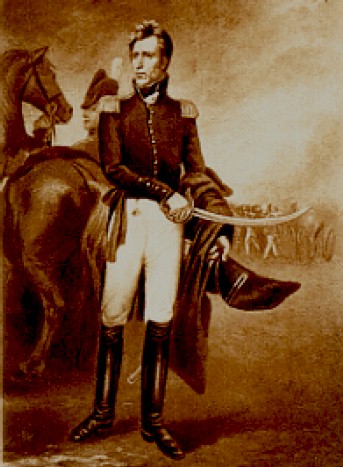
What's more, since Louisiana didn't become a state until 1812, it's been said that many of its residents did not yet feel a strong enough bond with the citizens of other far-away states to take the war personally.
But when the British soldiers took control of Washington, D.C., in August 1814, and burned the White House, the people of New Orleans were abruptly shaken into reality. The war's focus soon moved squarely toward their city because the British figured they could stop much of America's North/South trade and control the country's western frontier by taking New Orleans and then sailing their ships up the Mississippi River.
Barataria was an important approach to this influential port city, and the British were well aware of this. They offered Jean Lafitte a large sum of money and a captaincy in the Royal Navy for his allegiance.
Although he continued to tussle with Governor Claiborne, who considered him nothing more than a scoundrel, Lafitte felt an undeniable allegiance to the United States. He spurned the Redcoats' offer. He then sent a letter to Claiborne stating his loyalty to America and his willingness to fight for her. In his correspondence, he also requested that the governor cease harassing him and his men.
Claiborne received the letter with skepticism. His advisors were split over a proper course of action, but he decided against accepting Lafitte’s offer. Furthermore, he sent the warship Carolina and several accompanying vessels to Barataria to destroy what the privateer referred to as his "kingdom by the sea."
Fires were set and residences were destroyed. Most of the inhabitants were forced to retreat deep into the swamp. The date was September 16, 1814. Lafitte was deeply hurt, but he told his men that he still believed in the American ideals of freedom and justice under law. He also felt his predicament was Claiborne's doing — not that of the entire nation. So, he turned to rebuilding his empire and biding his time.
Lafitte saw his patient hope rewarded when the federal government sent General Jackson to New Orleans on December, 2nd to command the city's military defenses in the face of an imminent British attack.
In Jackson, Lafitte saw a man who was frank and honest. And somehow the swashbuckler managed to meet the general in person in mid-December and gain his trust.
Knowing Jackson was short on fighting men as well as munitions, Lafitte proposed his 1,000 men — plus flints, gunpowder, rifles and axes. He told Jackson that he and his men were willing to fight for America as free men.
Lafitte has been quoted as saying, "For a pardon for me and my Baratarians, we will help you send the enemy to hell. That is my promise."
Jackson accepted his terms. According to many observers, the two men became friends and mutual admirers from that first meeting.
While Claiborne and Lafitte never warmed to each other, Marshal Duplessis soon found himself on Lafitte's side, even though he had spent so much time previously trying to arrest the renegade.
Lafitte returned to Barataria to prepare his men for battle. Meanwhile, Jackson organized a defense strategy to use against the British.
All policing and civil matters were now under Jackson's authority, and the general declared the city to be under martial law and he enforced a curfew on the citizenry. Marshal Duplessis fell in line but Governor Claiborne was less subordinate since he formally held the position of commander in chief of the state's militia.
Jackson's authority was supreme. In one instance, a district judge objected to his edict of martial law, so the general arrested him and threw him out of town. This landed Jackson in hot water many years later.
The southern coastal waters were now reportedly brimming with English warships. To better monitor enemy forces, Claiborne and Duplessis traveled to Pensacola, Fla., 210 miles east of New Orleans, where they witnessed the British naval contingent performing maneuvers off the coast and preparing for battle.
It is here that the marshal proved invaluable to Jackson. He strongly sensed that it wouldn't be long before the British attacked New Orleans. Wanting Jackson to receive this intelligence first-hand and as quickly as possible, Duplessis used his Creole connections to send a four-page letter to Jackson dated October 17, 1814.
He forwarded the letter at great professional risk because he did not inform Claiborne of his actions. He recognized Jackson's authority over the governor and he didn't want his information to get bogged down in regular government channels.
Claiborne, on the other hand, still adhered to normal procedures when sending intelligence to key New Orleans decision makers, as if there was no martial law.
"The governor was bound by the many-tentacled grip of diplomacy, but the marshal was under no such competing pressures," Turk said. "My feeling is Duplessis saw this as the utmost national concern so In his correspondence to Jackson, Duplessis noted the need for several shore defenses, and he suggested several areas that he believed were prone to invasion.
Once back in New Orleans, the marshal continued to aid the general. Jackson still did not have the complete cooperation of all the city's officials, so the work of Duplessis and several others was crucial to his command.
"Although such moves created tension with the courts, Duplessis carried Jackson's orders between a patchwork system of military veterans and citizens," Turk said.
For his efforts, Duplessis was complimented by Jackson in the general's report to Secretary of War John Armstrong in late December, 1814. Wrote Jackson:
All my officers in the line did their duty, and I have every reason to be satisfied with the whole of my staff … Captain Reid, my other aid, and Messrs. Livingston, Duplessis and Davezac, who had volunteered their services, faced danger wherever it was to be met, and carried out my orders with the utmost promptitude.
- War
-
Roughly 4,600 men were under Jackson's command — including militia men, a collection of volunteers from throughout New Orleans, a company of "long rifles" from Kentucky and Lafitte's Baratarians. The British forces, coming by water under the charge of Sir Edward Pakenham, numbered 7,000.
Fighting began on December 23rd with a lake battle off the coast of New Orleans. Backed by cannon batteries, the American fighters held their own in the ensuing days and then into the new year.
A master of the hauntingly dangerous swamp lands, Lafitte commanded a band of sharpshooters. He and his men battled the Redcoats in several skirmishes, and they impressed General Jackson with their fearless resolve and calm bravery.
Jackson dug in seven miles south of the city on the plains of Chalmette — a narrow strip of land between the Mississippi River and the swamps through which he figured British foot soldiers would have to march to reach New Orleans.
As the forthcoming lines of British fell, they created literal stumbling blocks for the men behind them. Tripping over their fallen comrades in the obscurity, face-on into a swarm of bullets, British gallantry waned.
Joseph Geringer The actual Battle of New Orleans took place on January 8, 1815, shortly after Pakenham's troops arrived at Chalmette.
The fog was thick. The Americans crouched behind their man-made ramparts with their muzzles loaded.
The sound of British bagpipers filled the air as the Redcoats moved onward through the heavy air — toward the very location that Jackson surmised they would go.
Waiting patiently until the enemy was but 50 yards from his soldiers, Jackson gave the command to fire.
Line after line of the attackers fell, and the ensuing chaos proved more than the British could handle.
In "Jean Lafitte: Gentleman Pirate of New Orleans," Joseph Geringer wrote: "As the forthcoming lines of British fell, they created literal stumbling blocks for the men behind them. Tripping over their fallen comrades in the obscurity, face-on into a swarm of bullets, British gallantry waned."
Added Turk: "Largely thanks to Jackson's choice of position, good communication and resolve, the Americans won a decisive triumph. Pakenham fell mortally wounded, and the numerically superior British retreated."
A sizeable portion of that good communication was carried forth by Marshal Peter Duplessis, and the United States will forever be the better for it.
The marshal's term ended on January 17, 1815, after which, according to Turk, "he faded into obscurity."
Governor Claiborne died less than three years later of a liver ailment. General Jackson went on to become the nation's seventh president in 1829.
Although Duplessis was now gone from public view, his usefulness to Jackson became apparent many years after his service as marshal ended.
The year was 1843, and the former president was coming under some fire for arresting the district judge in New Orleans prior to the decisive war battle there. Jackson defended his actions under martial law.
The proof of his defense was none other than an old statement taken from Marshal Duplessis. "It was an irony," Turk said, "that the unsung hero at New Orleans would again aid Andrew Jackson 28 tears later."